
A new community battery for Alphington - with benefits for locals
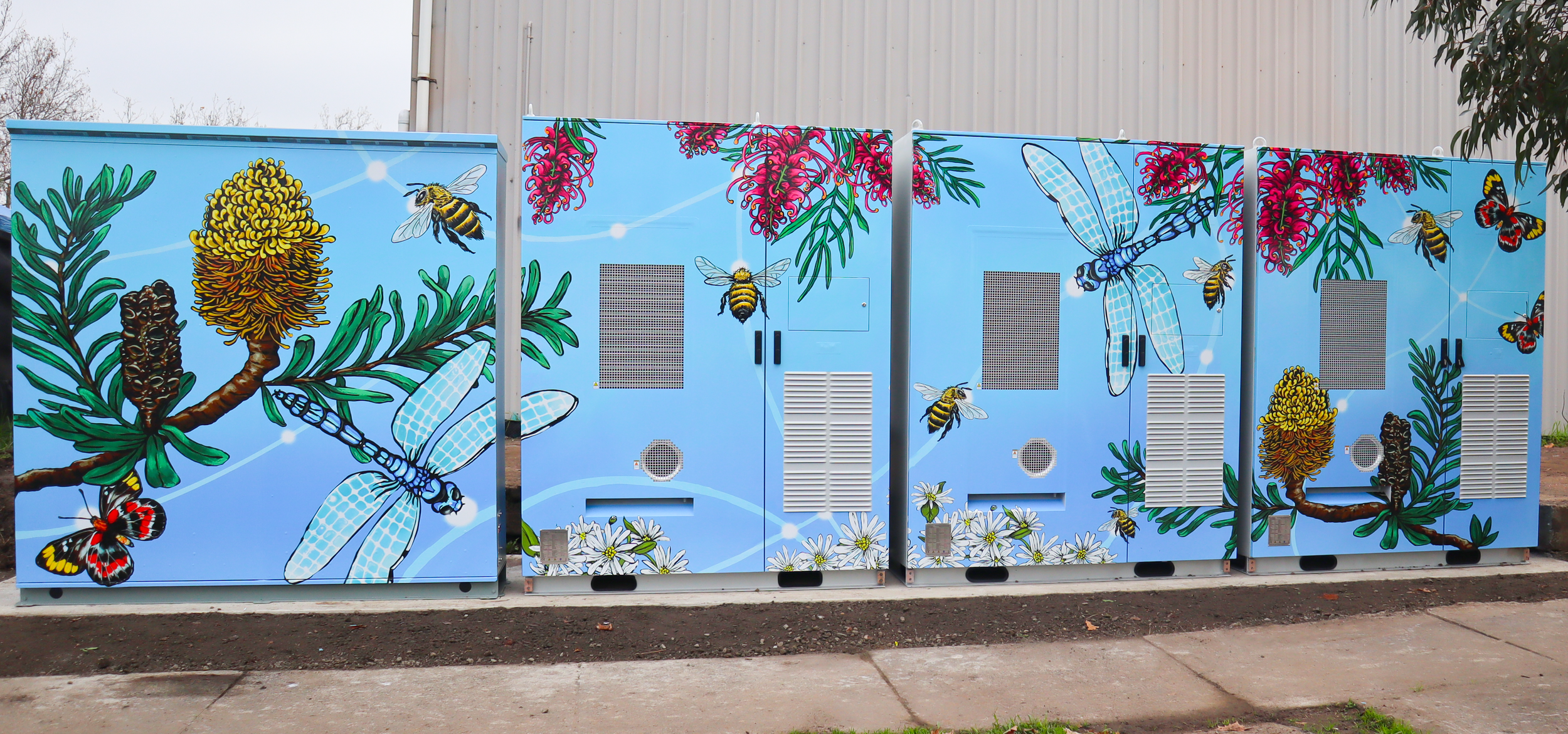
Alphington launched its community battery after eight years in the making. The project was driven by the not-for-profit volunteer group, Village Power, who are planning to share any profits from trading energy from the battery with up to 100 subscribers in the community it services.
The battery will operate as a ‘solar sponge’ - soaking up any excess (often wasted) energy in the middle of the day, and releasing it back into the grid at times of peak demand. Village Power is aiming much higher than just a battery, however. Their focus is to use their Alphington pilot as an education initiative and proof of concept for finding ways to maximise the efficiency of locally generated and consumed renewable energy and to encourage shifting local energy use away from peak periods.
Village Power is set to measure the percentage of renewable energy used by each participant through their ‘Community Energy’ program. Community Energy here means three elements:
the energy from participants’ own rooftop solar,
excess solar used by participants without solar when generated, and
the energy from the community battery.
This model provides a blueprint of how to think about locally generated and locally used energy.In other words, their goal is to make Alphington's better utilise existing locally generated energy by leveraging rooftop solar, household batteries, EV batteries and the community batteries.
Village Power has tried different models to make this possible, including a retail-led model (similar to a pilot on virtual networks by Deakin University). That was not possible and the current model is for a commercial partner, Acacia Energy, to trade the energy in the wholesale market.
What is innovative, is that this model will return small financial gains for participants while solving regulatory and insurance issues. This is what happens when an obsession with your own home energy system begs to go even further and become a community-wide effort - you find a way to make it work.
While financial gains from participants are likely to be small, their commitment to join will unlock important answers to the best way to develop, improve and expand this model. The ultimate goal of keeping energy local means huge efficiency savings and reduces overall strain on the grid.
The Village Power website says, "The first cohort of 48 program participants reflects the diversity of the neighbourhood: three quarters have rooftop solar, while a quarter — mostly renters and apartment residents — have no clean energy systems at all. For that group, the Village Power model is the only realistic way to access the benefits of locally generated renewable energy."
If the battery launch is anything to go on, there is an abundance of local interest. The battery was launched on a crisp June at the Alphington Farmers Market site, with plenty of fresh scones, hot beverages, face-painted kids, live music, a few friendly dogs and a packed house. It was alive with community spirit, collaboration and energy smarts - just a few of our favourite things.
Artwork on the battery is by Jo Travis: "native insects and plants visualise the power of many small contributions working together".
We applaud everyone involved and look forward to seeing how the pilot progresses, and how the model evolves and is expanded and replicated elsewhere, as intended.
The battery was funded under the Victorian Government Neighbourhood Battery Initiative. Partnered with Acacia Energy. Artwork by Jo Travis. It is situated at the Alphington Farmers Market, with land leased from Darebin City Council, servicing a specific area that overlaps both Darebin City Council and Yarra City Council.
